Innovations in Metal Fabrication: How Technology is Shaping the Future of Welding Dec 23, 2025
To begin with, the incorporation of advanced automation techniques is revolutionizing traditional welding methods. Robots and automated welding machines now perform tasks that were previously labor-intensive and time-consuming. This shift not only speeds up production but also ensures greater consistency and precision. For businesses like Edwards Welding & Fabrication, embracing robotic welding means higher efficiency, reduced waste, and ability to handle complex projects with precision.
Furthermore, the emergence of 3D printing in metal fabrication has opened new doors in design and manufacturing. Additive manufacturing, as it is also known, allows for the creation of detailed and intricate components that were previously impossible to construct using conventional methods. This technology is particularly advantageous for prototype development and custom fabrication. At Edwards Welding & Fabrication, 3D printing technology is leveraged to create bespoke components, allowing for greater flexibility and creativity in design solutions.
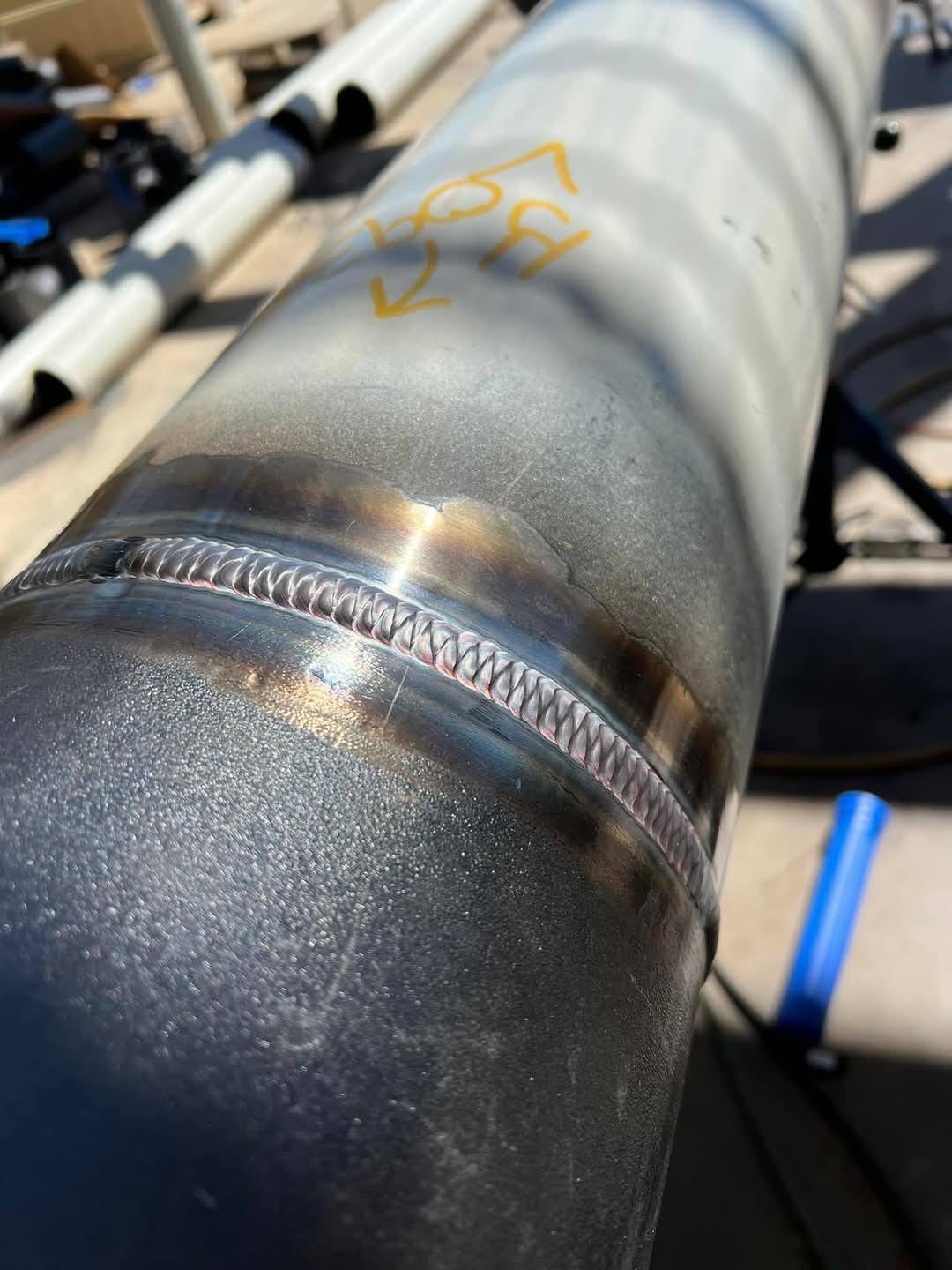
Moreover, advancements in welding materials and techniques have significantly improved the quality and durability of welds. High-performance alloys and composite materials are leading the charge, offering enhanced strength and resistance to corrosion. Additionally, new welding techniques such as laser beam welding and electron beam welding provide superior control and are less prone to defects. These innovations ensure that projects undertaken by Edwards Welding & Fabrication stand the test of time and withstand rigorous conditions.
Digital technologies are also making a profound impact on metal fabrication. The integration of Industry 4.0 and smart technology is ushering in an era of connected welding environments. With the use of sensors and IoT devices, data can be collected and analyzed in real time, allowing welders to optimize processes and take proactive maintenance measures. For Edwards Welding & Fabrication, this means enhanced oversight and quality control, leading to reduced downtime and improved productivity.
Lastly, virtual and augmented reality technologies are changing the way welders are trained and assessed. VR and AR provide immersive training environments that mimic real-world scenarios, enabling welders to hone their skills without the risk inherent in traditional training setups. These technologies enhance safety and skill acquisition, which is particularly beneficial for companies like Edwards Welding & Fabrication that value skilled craftsmanship and safety above all.
In conclusion, the future of welding and metal fabrication is bright, with technology playing a pivotal role in its evolution. Companies like Edwards Welding & Fabrication are at the forefront, adopting these technologies to improve efficiency, quality, and innovation. As technology continues to advance, the industry will undoubtedly see even more exciting developments, further pushing the boundaries of what is possible in metal fabrication. By staying ahead of these trends, Edwards Welding & Fabrication ensures not only their own success but also provides invaluable solutions to their clients, helping them meet the challenges of tomorrow, today.
/filters:no_upscale()/filters:format(webp)/media/cc05a3cb-c4ba-423d-917d-f176c9de7915.jpeg)
/filters:no_upscale()/filters:format(webp)/media/a3e71422-a8a6-4263-a522-94dd6e28b20c.jpeg)